Minimalist Travel Packing: Carry-On Planner System
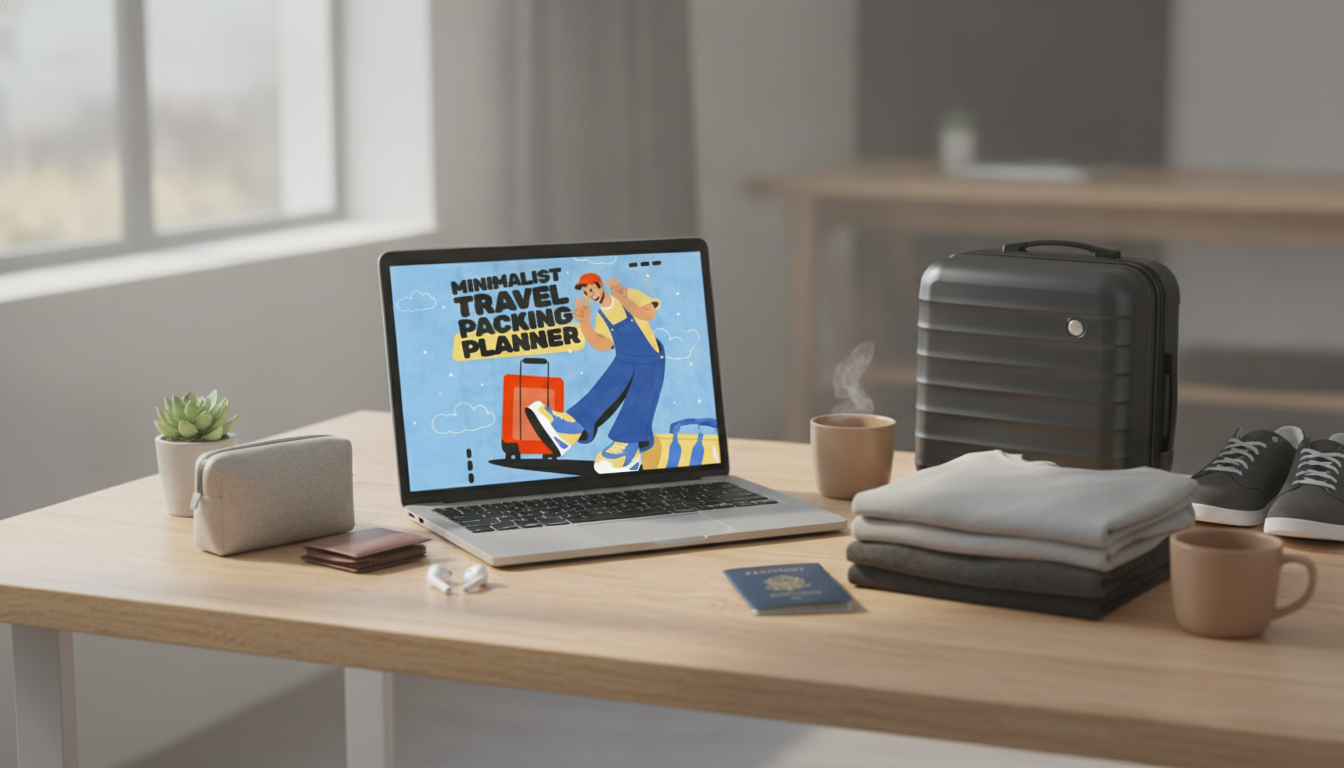
Minimalist Travel Packing: A Calm System That Fits in a Carry-On
Packing light gets easier when decisions are made before the suitcase opens. A minimalist packing approach focuses on versatile outfits, fewer “just in case” items, and a repeatable checklist that fits the trip length, weather, and activities. The goal isn’t to travel with the fewest items possible—it’s to travel with the right items, packed with confidence, so you can move faster and think less on departure day.
What “minimalist packing” actually means (and what it doesn’t)
Minimalist packing is a method, not a contest. Done well, it keeps you comfortable and prepared without hauling duplicates and low-use extras.
- Prioritizes versatility: fewer items that mix and match across multiple outfits.
- Plans around a realistic itinerary: work, city days, outdoors, events, swim, gym—only what’s actually happening.
- Reduces duplicates: one main jacket, one main walking shoe category (plus one alternate only if needed).
- Builds a tight toiletries kit: travel sizes and refills rather than full bottles.
- Doesn’t mean discomfort: essentials for sleep, hygiene, and weather safety still make the cut.
Why packing feels stressful—and how a planner fixes the bottlenecks
Packing stress usually comes from a few predictable bottlenecks. A planner-based system removes friction by turning a messy mental load into a sequence you can repeat.
- Decision fatigue: too many choices right before departure; a preset list speeds choices up.
- Overpacking from uncertainty: weather and activities handled by modules (add/remove sections).
- Forgetting small essentials: chargers, adapters, meds, documents; a checklist catches gaps.
- Last-minute shopping: a planner doubles as a “buy/replace” list for items running low.
- Messy suitcase management: packing order and categories (tops, bottoms, layers) reduce chaos.
What the Minimalist Travel Packing Planner helps organize
Instead of a single giant list, a good digital planner organizes your trip like a set of building blocks—so you only pack what applies.
- Trip details: destination, dates, expected weather range, lodging type, laundry access.
- Activity-based packing: separates “must-have” items by day types (transit, city, hiking, beach).
- Capsule wardrobe plan: a small set of tops/bottoms/layers that creates multiple outfits.
- Toiletries and health: core kit + trip-specific add-ons (sun care, cold meds, blister care).
- Tech and documents: charging setup, backups, tickets, IDs, cards, copies.
A simple workflow: pack light in 30 minutes (repeatable every trip)
When you follow the same order each time, you stop second-guessing. This workflow is designed to keep you carry-on-friendly without feeling restricted.
- Set rules: pick your bag size (carry-on/personal item), number of shoes, and laundry plan.
- Choose a color palette: 2–3 main colors + 1 accent to maximize outfit matching.
- Build outfits first, then count items: aim to re-wear key pieces confidently.
- Add layers for temperature swings: solve mornings/evenings with layers, not extra outfits.
- Lock toiletries and tech: use one pouch each; remove duplicates (extra cables, extra lotions).
- Pack by category, then do a bulk check: swap bulky items for packable alternatives before you zip.
Capsule wardrobe packing: fewer pieces, more outfits
Example minimalist capsule (adjust to climate and activities)
| Category | Typical quantity | Notes |
|---|---|---|
| Tops | 3–5 | Mix sleeves; prioritize pieces that layer well |
| Bottoms | 2–3 | One can be a versatile “all-day” pair |
| Layers | 2–3 | Mid-layer + packable outer layer; add rain layer if needed |
| Shoes | 1–2 | Comfort first; add a second pair only if itinerary demands |
| Underwear/socks | 4–7 | Scale with laundry access; quick-dry helps |
| Sleepwear | 1 | Doubles as loungewear when possible |
Carry-on friendly essentials that prevent common travel problems
For rules on liquids and what can go through security, verify specifics with TSA: What Can I Bring?. For battery limits (especially power banks), reference FAA PackSafe. For destination-based health guidance, check CDC Travelers’ Health.
Using a digital packing guide for faster updates and fewer mistakes
When to add items (and when to cut them)
A quick way to compare: planner system vs. a generic checklist
| Feature | Planner-based approach | Generic checklist |
|---|---|---|
| Adaptable to itinerary | High (modules per activity) | Low (one-size-fits-all) |
| Prevents duplicates | Strong (category counts and rules) | Inconsistent |
| Reusable templates | Yes (repeatable trips) | Rarely |
| Post-trip learning | Built-in notes and updates | Usually forgotten |
Product pick: Minimalist Travel Packing Planner (digital guide)
If packing is stressful mainly because it’s inconsistent—different trips, different weather, different rules—the fix is a repeatable structure. The Minimalist Travel Packing Planner (digital packing guide) is designed to help pack light with an organized checklist system that’s easy to reuse and refine after every trip.
For a small, pack-friendly style upgrade that doesn’t add much bulk, accessories can replace extra outfits: consider the 925 Sterling Silver K Gold Drop Earrings or the 18k Polished Balloon Beaded Bracelet with Customizable English Letters as lightweight options that change the feel of repeat basics.
FAQ
How many outfits are enough for a 7-day trip when packing light?
Plan for about 4–5 core outfits, then rely on layers and re-wearing key pieces. Laundry access (or a quick sink-wash plan) is the deciding factor for how many tops and basics you’ll need.
What should always go in a carry-on even when packing minimalist?
Keep documents/IDs, medications, valuables, chargers, and a small “delay kit” (one change of underwear/socks and basic toiletries) in your carry-on. That covers the most common problems if checked luggage is delayed or a long travel day runs late.
Is a digital packing planner worth it if a notes app checklist already exists?
Yes if you want structure beyond a flat list: templates by trip type, category counts that prevent duplicates, and a built-in post-trip review to make the next pack even lighter. A planner also makes it easier to add or remove modules based on weather and activities.










Leave a comment